
Moving Costs
Understanding Moving Costs
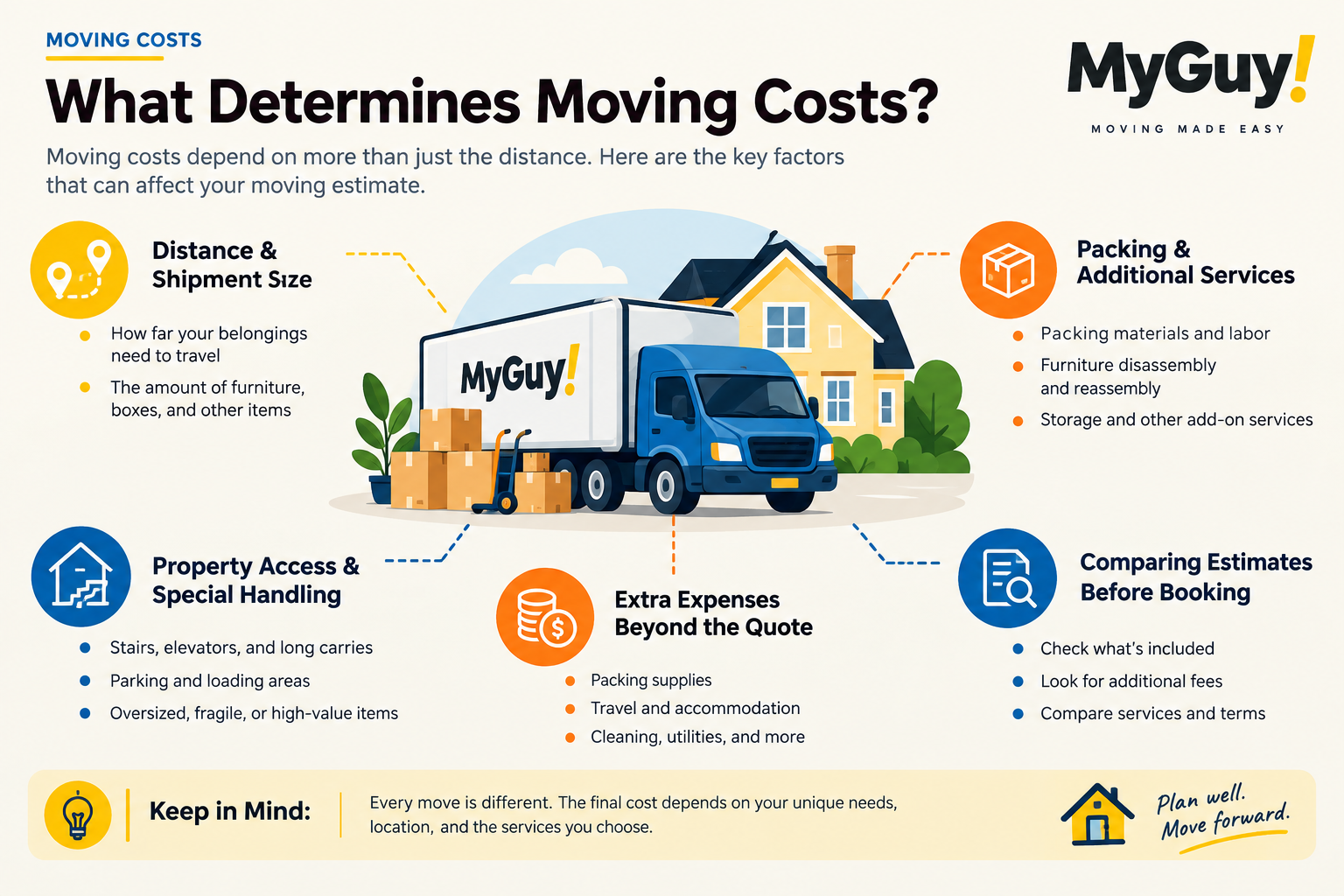
Moving costs depend on more than distance. The size of your shipment, services you need, property access, and other expenses can all affect your final budget. Use this guide to understand what influences a moving estimate, what charges to ask about, and how to plan for your move.
Quick Overview
Start by considering how far you're moving, how many belongings you're taking, and whether you need packing, storage, or other services. Then review the estimate to understand what's included and which charges may be separate. Budget for expenses outside the moving company's quote, too, so you have a more complete picture of your moving costs.
Quick Facts
- Distance and shipment size are common factors in moving costs.
- Packing, storage, special handling, and other services may increase the price.
- Stairs, parking restrictions, elevators, and limited truck access can affect the work required.
- Not every moving company includes the same services or fees in its estimate.
- Travel, cleaning, utilities, and temporary accommodation may be separate from the mover's invoice.
- Compare written estimates based on the same inventory and requested services.
- Update your mover if your inventory, addresses, or moving arrangements change.
How to Use This Guide
A moving estimate gives you a starting point, but your total moving budget may include other services and personal expenses. Reviewing each part separately makes it easier to understand where your money is going.
Start with the factors that apply to your move, then review your estimate and identify any costs that are not included. If you're comparing moving companies, use the same inventory and service requirements for each quote.
What Determines Moving Costs?
Moving companies use different pricing methods, and the factors that matter most depend on the type of move and services requested. These are the main areas to consider when preparing your budget.
Distance Between Locations
The distance between your current home and your destination can affect transportation costs. Local moves may use hourly pricing, a minimum service period, a flat rate, or another arrangement. Long-distance moves may account for distance, shipment weight or volume, delivery requirements, and other transportation factors.
The exact pricing method varies by company and move type. Ask how transportation is calculated and whether travel time, mileage, or other transportation-related charges are included in the estimate.
Size of Your Shipment
The amount of furniture, boxes, appliances, and other belongings you plan to move can influence the crew, truck space, labor, and transportation required. A larger shipment generally requires more handling than a smaller one.
Reducing the number of items you're taking may help lower some moving expenses, depending on the company's pricing method. Before requesting estimates, sort through your belongings and create a realistic inventory of what needs to be moved.
Packing and Additional Services
The services you request can affect the total price. Some customers pack their belongings themselves, while others prefer to have the moving company handle some or all of the packing.
Depending on the service agreement, additional work may include:
- Packing household belongings and preparing boxes.
- Supplying boxes, wrapping materials, and other packing supplies.
- Disassembling and reassembling furniture.
- Handling fragile, bulky, or unusually heavy items.
- Providing temporary or longer-term storage.
- Making additional pickup or delivery stops.
Ask which services are included in the quote and which are priced separately. If you need additional help, request it before accepting the estimate so the company can account for your requirements.
How Property Access Can Affect the Cost
The conditions at your current home and destination can affect how easily the crew can load and unload your belongings. Even when the distance and inventory stay the same, difficult access may change the amount of work involved.
Stairs, Elevators, and Long Carries
Stairs, limited elevator access, long walks between your door and the truck, or restricted loading areas may require additional time or handling. Whether these conditions result in a separate fee depends on the company's pricing and the terms of your estimate.
Parking and Truck Access
If a moving truck cannot park close to your property, the crew may need to carry items farther or use a different loading arrangement. In some circumstances, a smaller shuttle vehicle may be necessary.
Tell the mover about parking restrictions, narrow driveways, building access rules, elevator reservations, and other limitations at both locations. Share any relevant details before the estimate is finalized.
What Other Services May Add to the Cost?
Some moving expenses depend on the services you request or the conditions encountered during the move. Other charges may apply only in specific circumstances. They are not automatic fees, so confirm which ones apply to your situation.
Potential Additional Charges
- Travel or minimum service time: Some local movers use minimum hours or pricing arrangements that account for crew travel.
- Access-related charges: Stairs, long carries, shuttle service, or other difficult access conditions may affect the price.
- Packing supplies: Boxes, tape, protective wrap, and specialty cartons may cost extra if they're not included.
- Storage: Storage, additional handling, and transportation to or from a storage facility may be priced separately.
- Special-item handling: Pianos, safes, oversized furniture, and other difficult-to-move belongings may require specialized labor or equipment.
- Additional stops: Collecting or delivering belongings at multiple addresses may affect the total.
- Schedule changes: Rescheduling or cancellation terms may involve conditions or fees under your agreement.
Ask the moving company to explain any applicable charge, what triggers it, and how the amount is calculated. Check whether the service is already included in your estimate before agreeing to pay for it separately.
How to Understand a Moving Estimate
A moving estimate helps you understand the expected cost of your move, but the total is only meaningful when you know what the quote covers. Two estimates may look similar while including different services, pricing terms, or assumptions about your shipment.
What to Review Before Accepting a Quote
- Inventory: Does the estimate reflect the belongings you plan to move?
- Services: Are packing, loading, unloading, furniture disassembly, and reassembly included where needed?
- Property access: Have you disclosed stairs, elevators, parking restrictions, long carries, and limited truck access?
- Estimate type: Understand whether the estimate is binding, non-binding, or based on another pricing arrangement, where applicable.
- Additional charges: Identify services or conditions that could result in extra costs.
- Protection options: Review the applicable liability or valuation coverage and any available options.
- Schedule: Confirm the pickup date and expected delivery arrangements.
- Payment terms: Review deposits, accepted payment methods, the balance due, and other conditions.
Request a written estimate and read the terms before committing. If anything is unclear, ask the company to explain it and provide written confirmation of the relevant details.
How to Compare Moving Estimates Fairly
The lowest quote is not necessarily the least expensive option in the end. A fair comparison starts with estimates based on the same shipment, requested services, and moving arrangements.
Comparison Checklist
- Provide each company with the same inventory and accurate move details.
- Request comparable services, including any packing, storage, or special handling you need.
- Check the pricing method and understand what could change the quoted amount.
- Review exclusions, additional charges, and conditions that may affect the final cost.
- Compare protection options and the applicable terms.
- Review deposits, payment requirements, cancellation terms, and scheduling details.
- Verify the company's identity, contact information, and applicable licensing or registration.
Consider the clarity of the estimate, the services offered, and how well the company answers your questions. A quote that clearly explains the expected work and applicable charges is easier to evaluate than one that leaves important details unresolved.
How Moving Costs Vary by Type of Move
The factors that affect your budget depend partly on the kind of move you're planning. Use the following points to identify questions worth asking when requesting estimates.
Local Moves
Local moves may be priced by the hour, through a minimum service period, at a flat rate, or using another arrangement. Crew size, travel time, the amount of work, and property access can all affect the cost.
Long-Distance Moves
Long-distance pricing may account for shipment weight or volume, distance, transportation requirements, delivery arrangements, and additional services. Ask how transportation is priced and whether the estimate includes the services you need.
Apartment and Condo Moves
Apartment and condo moves may involve building rules, elevator reservations, loading-dock schedules, parking limitations, stairs, or longer carrying distances. Share these details with the mover before the estimate is prepared.
Moves With Additional Services
Full-service packing, temporary storage, multiple pickup or delivery locations, and special-item handling can affect the total. Request these services upfront and check whether they're included in the estimate or charged separately.
Budget for Expenses Outside the Moving Company's Quote
Your overall moving budget should account for more than the moving company's invoice. Depending on your plans, you may have preparation, travel, housing, and setup expenses before, during, or after the move.
Common Personal Moving Expenses
- Packing supplies: Boxes, tape, labels, protective wrap, and specialty cartons.
- Travel: Fuel, airfare, public transportation, tolls, parking, or rental vehicles.
- Accommodation and meals: Hotel stays, meals during travel, and other trip-related expenses.
- Cleaning and repairs: Move-out cleaning, minor repairs, or services required by a lease or property agreement.
- Utility and service setup: Connection fees, deposits, internet installation, and other setup costs.
- Storage or temporary housing: Costs incurred if your old and new homes are not available on the same schedule.
- Overlapping housing costs: Rent, mortgage payments, or other housing expenses that continue during the transition.
- Family and pet arrangements: Childcare, pet boarding, or other support needed on moving day.
Not every move requires these expenses. Review your timeline and personal arrangements, then include the costs that apply to your situation.
How to Avoid Unexpected Moving Costs
You may not be able to predict every expense, but clear communication and preparation can reduce avoidable surprises. The goal is to make sure the mover understands the work involved and you understand the terms of the quote.
Before Moving Day
- Create an inventory of the belongings you plan to move.
- Disclose stairs, elevators, parking limitations, long carries, and building requirements.
- Identify fragile, oversized, unusually heavy, or high-value belongings that may need special handling.
- Confirm which packing materials and services are included.
- Ask about additional charges and the conditions that could trigger them.
- Review the written estimate, agreement, payment schedule, and cancellation terms.
- Notify the company if your inventory, addresses, dates, or service needs change.
- Keep copies of your estimate, agreement, inventory, and written communications.
When Your Moving Plans Change
If you add belongings, change an address, request extra services, or adjust the moving date, contact the company as soon as possible. Ask whether the change affects the estimate and request updated terms in writing where appropriate.
Frequently Asked Questions
What is usually included in a moving quote?
It depends on the company and the type of move. A quote may cover transportation and specified labor or services, while packing, materials, storage, special handling, or access-related charges may be separate. Review the written estimate to confirm what is included.
Why do moving companies give different prices for the same move?
Companies may use different pricing methods, crew sizes, service packages, shipment estimates, schedules, and terms. Make sure each mover is quoting the same inventory and requested services before comparing totals.
Can my final moving cost be different from the estimate?
It can, depending on the estimate type, your agreement, applicable rules, and whether the move changes. Additional belongings or services not included in the original estimate may affect the price. Ask the mover to explain the conditions that could change the amount.
Can I save money by packing my belongings myself?
Self-packing may reduce packing labor charges, depending on the company's pricing. However, you'll need to account for supplies and your own time. Check the mover's packing requirements and how self-packed belongings are treated under its applicable protection terms.
How much extra should I budget for moving expenses?
There is no single amount that works for every move. Start with your written moving estimate, add your expected costs for travel, supplies, cleaning, storage, utilities, and other needs, then set aside a contingency amount that fits your financial situation.
When should I request moving estimates?
Request estimates as early as practical, especially if you have a fixed moving date or expect to move during a busy period. Provide an accurate inventory and access details, then update the company if your plans change.
What should I do if I notice an unexpected charge?
Ask the mover to explain the charge and identify the relevant estimate or agreement terms. Keep copies of the estimate, agreement, invoices, and related communications so you can review the details and address any discrepancy.